
GreyReady by DrainHarvest
“Greywater Ready” New Construction
(Text is an excerpt from © Greywater, Greenlandscape by Laura Allen )
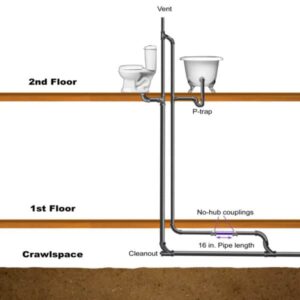
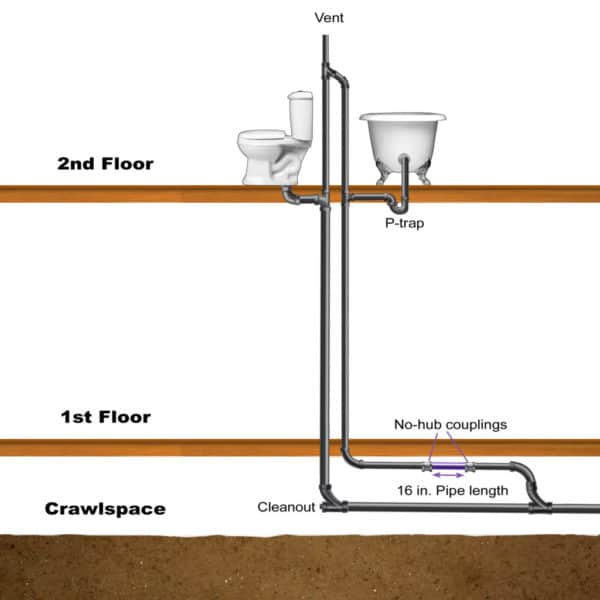
Greywater pipe runs into crawl space separately from blackwater pipe. Two no-hub couplings make it easy to remove a section of pipe and install the future diverter valve.
If you construct a home with a future greywater system in mind, it will be less costly and easier to install the future system. Architects, designers, builders, and developers can plan these “greywater-ready” buildings using a few basic design principals. Local or statewide ordinances can require this practice.
1. Estimate how much greywater will be generated and how much of the landscape can be irrigated. Plan to access enough of the greywater sources so the landscape can be irrigated entirely with greywater.
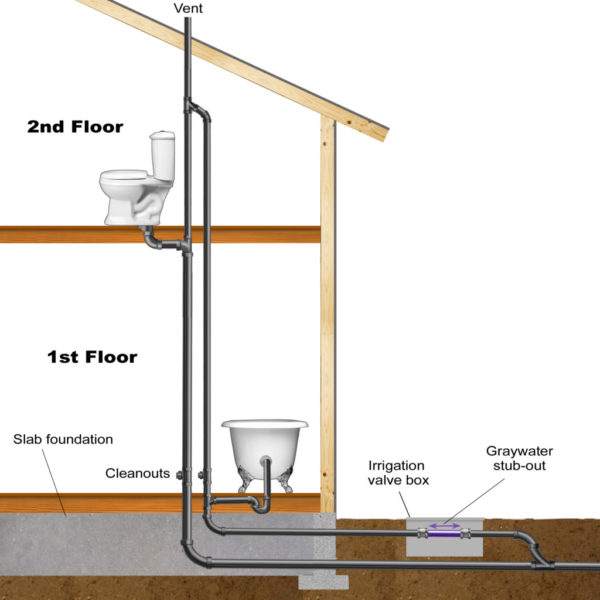
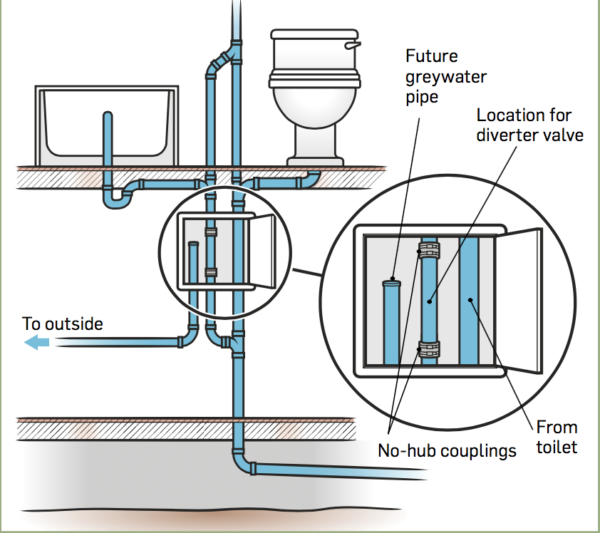
2. Create greywater accessibility points so that the greywater drains are accessible and able to be diverted into a greywater irrigation system. If greywater drains can’t be accessed below the building (in a crawl space or basement), create an access panel in the wall (see image) or a subsurface access point in the landscape (see image) before greywater combines with any toilet water.
3. Keep the greywater accessibility location as high in elevation as possible to allow for gravity-fed systems (NOTE: 5′ is a good balance between height for 3-Way Valve access and pressure head for gravity), and locate it so the greywater can access an irrigated portion of the landscape.
4. If the future diverter valve location won’t be easy to access for manual turning of the valve, make sure an electrical outlet is located nearby so an electronic actuator can be connected to the diverter valve for remote switching.
Options for Slab-on Grade Construction
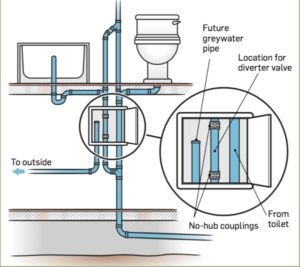
Before closing up the walls, install a greywater pipe to the outside of the building with an access panel where the diverter valve will be located. The diverter valve will direct greywater either into the pipe to the landscape or into the existing pipe to the sewer. Image credit James Provost in Greywater Green Landscape
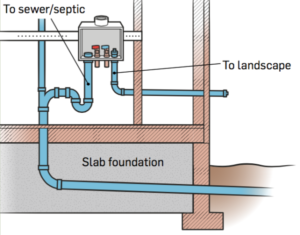
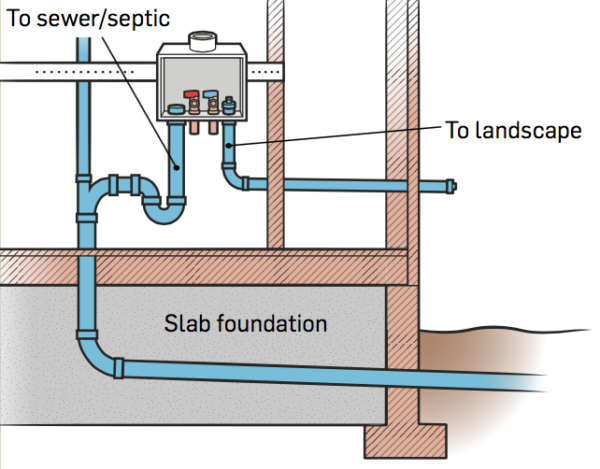
Install a dual-drain washer box. Plumb one drain conventionally to the sewer/septic, and outfit the other drain with a pipe to the outside of the house. A 1″ flexible tube can be snaked through this pipe for a future L2L system. Image credit James Provost in Greywater, Green Landscape.
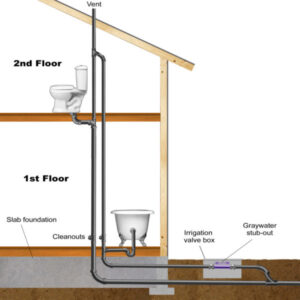
Keep greywater pipe separate from the toilet pipe until outside the building. Locate an irrigation valve box above the location for the diverter valve for future access.
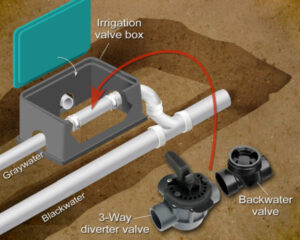
Close-up of location for future diverter valve.
Call
(928) 713-4861
Address
Los Angeles, CA
Sedona, AZ
info@drainharvest.com
Send us a Note
